
Reposted from Substack: https://open.substack.com/pub/suzanneashastone/p/france-killing-200-wolves-is-not?utm_campaign=post-expanded-share&utm_medium=web
Authorizing the removal of nearly 20% of a protected predator population is not a minor adjustment. It is a structural intervention.
The decision is framed as livestock protection. But the wolf cull is not just about wolves. It is a reminder of something larger: traditional livestock systems continue to define the limits under which ecological restoration is allowed to proceed.
The question is not whether farmers matter. They do.
The question is whether the scale — and increasingly archaic structure — of livestock production now defines the outer boundary of biodiversity recovery.
The Planet We Have Built
The numbers are difficult to ignore.
WWF’s Living Planet Index reports an average 73% decline in monitored vertebrate population sizes between 1970 and 2020 (WWF, Living Planet Report 2024).
At the same time, Earth’s biomass has been radically reordered. A landmark global synthesis published in PNAS found that humans and livestock now account for roughly 96% of all mammal biomass, leaving only about 4% as wild mammals (Bar-On et al., 2018).
By weight:
62% livestock and pets
34% humans
4% wild mammals
Birds tell a similar story. The same synthesis found that the vast majority of bird biomass is domesticated poultry rather than wild species (Bar-On et al., 2018; see also The Guardian, 2018 summary).
Life did not disappear. It was converted.
We have not eliminated biomass. We have domesticated and industrialized it.
Land Use Reveals the Structure
This reordering is driven by land.
More than three-quarters of global agricultural land is used for livestock — grazing or growing feed crops (Our World in Data; Poore & Nemecek, Science, 2018).
Yet meat and dairy provide only about 18% of global calories while using the majority of agricultural land (Poore & Nemecek, 2018).
Globally, agriculture is identified as a threat for 86% of species currently at risk of extinction (UNEP, 2021).
Livestock is not a marginal feature of the global economy. It is one of the primary forces shaping the biosphere.
The planet is not short on biomass.
It is short on wildness.
The French Case in Context
France is not the Amazon. It is not a tropical deforestation frontier.
But the structural logic is shared: ecological recovery is permitted only so far as it does not disrupt existing livestock systems.
When wolves expand, they are killed.
When ecosystems push back, they are managed downward.
This is not coexistence. It is boundary enforcement.
The wolf becomes the visible friction point in a much larger structural reality: biodiversity restoration remains subordinate to agricultural rigidity.
Coexistence Is More Than Presence
Wolves can remain on a landscape and still not coexist. They cannot fulfill their full ecological role when they are under intense hunting pressure.
Coexistence is not tolerance under pressure. It implies mutual adaptation over time. It means:
Prevention improves.
Livestock systems evolve to adapt to predator permanence.
Conflict declines structurally.
Lethal control becomes demonstrably rare.
When annual removals approaching 20% become normalized, adaptation is not occurring on both sides.
The wolf population absorbs the adjustment.
That is management by culling.
The French Numbers
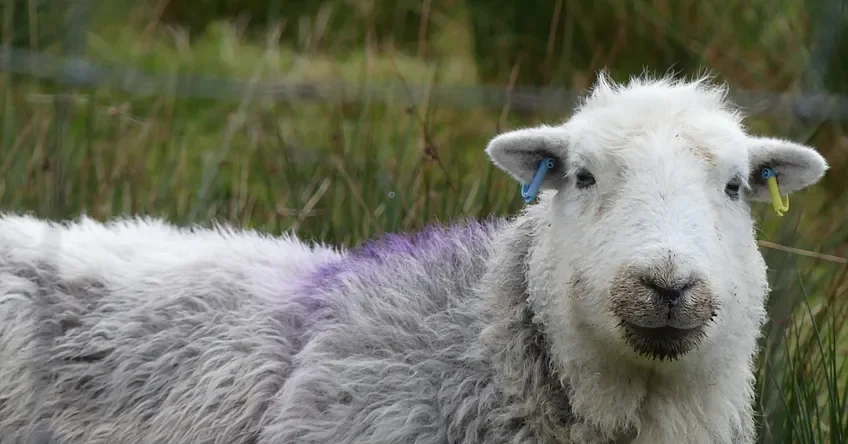
Wolves are attributed to roughly 10,000–12,000 livestock losses annually in France, approximately 0.15% of the national sheep population (French Ministry of Ecological Transition data; national sheep herd ~6–7 million head).
For individual farmers, losses can be serious and destabilizing. France invests tens of millions of euros annually in prevention measures and compensation (French National Wolf Plan).
Research on wolf diet in France and the Alpine Arc consistently shows that wolves’ diets remain predominantly wild ungulates, even in high-conflict regions (e.g., Marucco et al.; European wolf diet syntheses). Livestock is taken — but it is not preferred prey.
So why does lethal removal remain central?
Is it political pressure? Institutional fatigue? Uneven implementation of prevention? Or a deeper governance reflex: protect production first, adapt ecosystems second?
Removing 20% of a predator population is not neutral management. It is governance by archaic culling — a step backward at a moment when biodiversity recovery demands modernization.
What Real Coexistence Looks Like
The solutions are not utopian. They are practical — and they already exist.
In Abruzzo, Italy, long-term investment in livestock guardian dogs, fencing, shepherding, and cultural adaptation has supported wolf persistence without systematic annual population reduction. Prevention is treated as infrastructure, not an emergency response.
The choice is not wolves or farmers.
There are working models that demonstrate something more durable and more hopeful: systems in which livestock production adapts and wildlife stabilizes without routine large-scale killing.
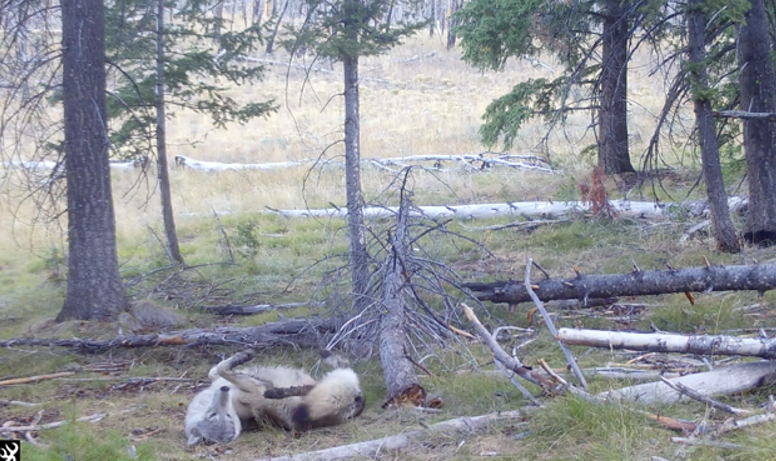
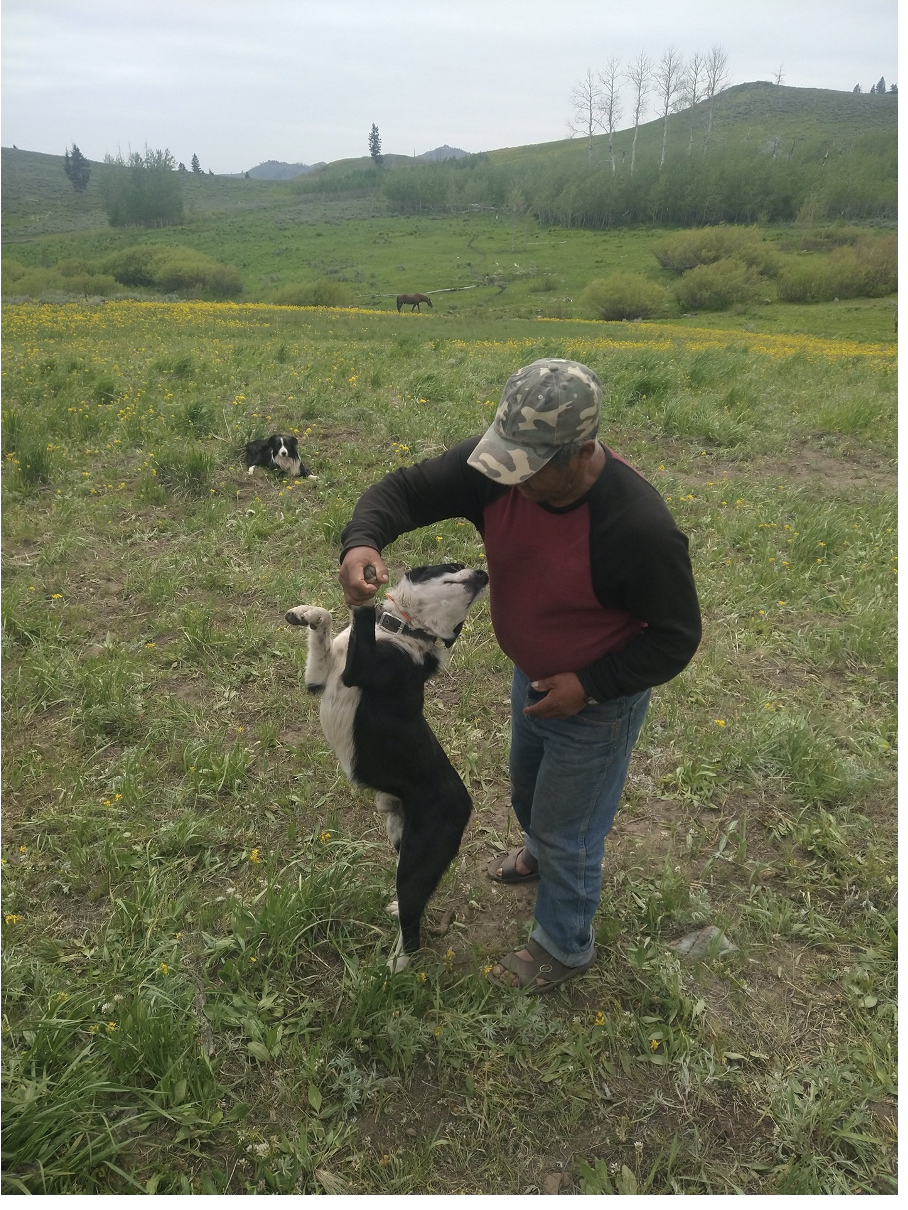
One of the most documented examples is the Wood River Wolf Project in central Idaho, launched in 2008 as a landscape-scale demonstration of nonlethal coexistence across rugged grazing country running tens of thousands of sheep.
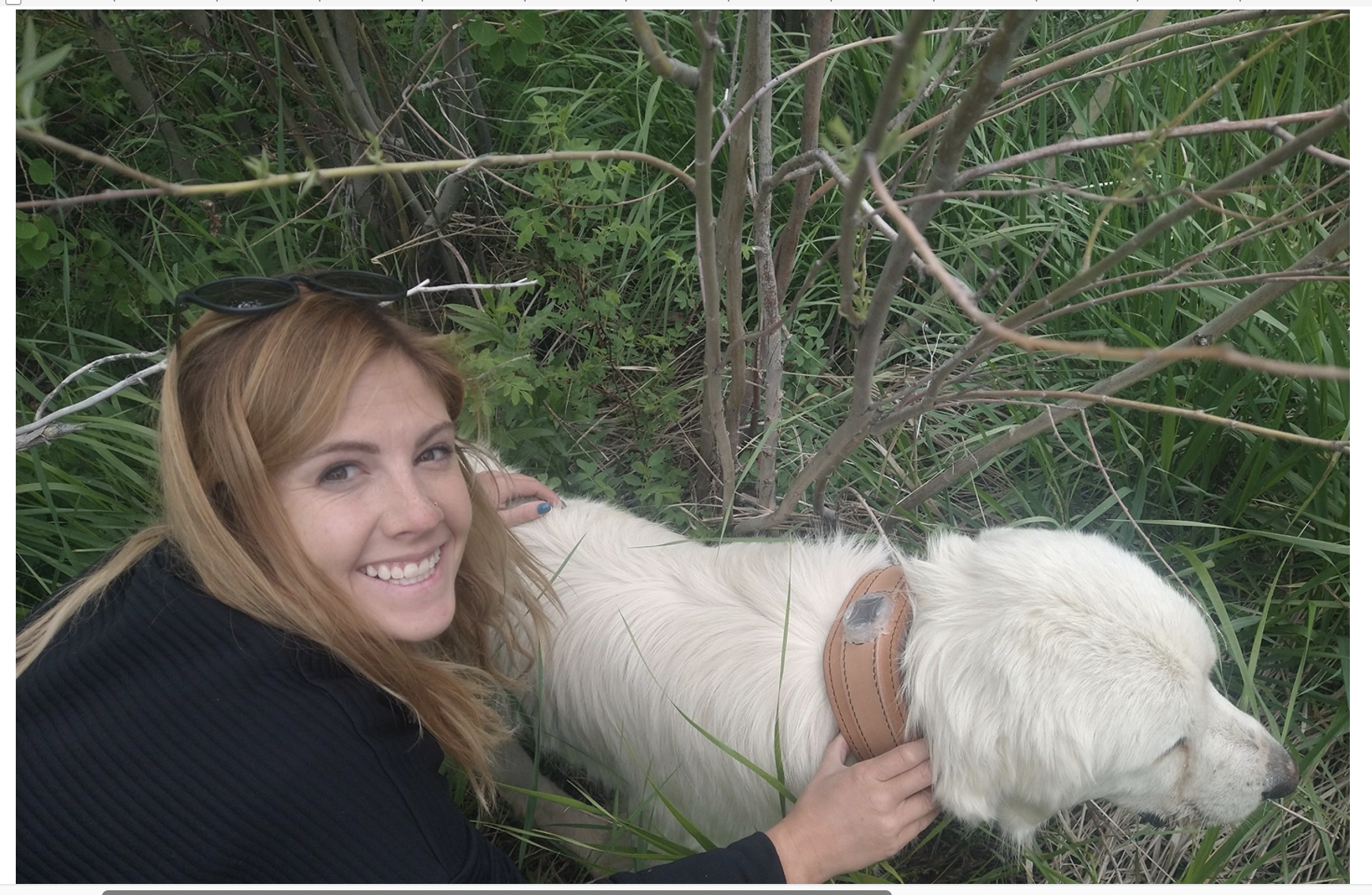
Rather than defaulting to wolf removal after depredation, ranchers, community members, wildlife agencies, and conservation partners implemented proactive deterrents — livestock guardian dogs, temporary fladry enclosures, increased human presence, lights, and sound devices — designed to reduce predation risk before losses occur.
Over nearly two decades, the project has helped protect roughly 20,000 sheep annually grazed on public lands while averaging fewer than five sheep losses per year — a loss rate of about 0.025%. These losses have remained roughly 90% lower than those reported elsewhere in Idaho under traditional management. Only two wolves have been killed in response to livestock conflict over the entire period.
In other words, in a rugged, mountainous, multi-use landscape comparable in many ecological respects to the French Alpine Arc — including large sheep bands averaging around 1,200 animals and a 90–120 day summer grazing season — predation can be minimized without making lethal control the backbone of policy.
Sheep graze in daily proximity to wolf packs with extremely low losses and without systematic wolf removal. Prevention costs per sheep are also lower than current French expenditures, even acknowledging the smaller geographic scale (approximately 1,200 km²).
These outcomes directly challenge the narrative that coexistence inevitably entails either high livestock loss or recurring predator reduction. They show that coexistence can be engineered through design — and that coordinated prevention and shared responsibility benefit both producers and predators.
A Comparable Alpine System — With Lower Losses
French officials often argue that alpine terrain makes coexistence inherently difficult. Yet the Wood River study area operates under a coordinated alpine transhumance system protecting thousands of sheep in rugged terrain under exposure conditions strikingly similar to those in the French Alps.
The Wood River Wolf Project study documents fewer than five sheep lost annually — approximately 0.025%.
France’s national rate of loss to wolves is approximately 0.15% — roughly six times higher.
The difference is not between catastrophic and negligible. It is between very low and extremely low.
Which raises a legitimate question:
If comparable alpine grazing systems can achieve significantly lower loss rates without relying on population-level lethal control as a primary strategy, what prevents France from replicating those outcomes in its highest-conflict zones?
These wolf and livestock coexistence systems are not conflict-free. But they demonstrate something essential: when human systems meaningfully adapt, reliance on killing declines.
Coexistence strengthens through redesign — not recurring reduction.
The Legal and Ecological Context
Article 13 of the Treaty on the Functioning of the European Union recognizes animals as sentient beings and requires that their welfare be given full regard in EU policy, including wildlife management.
This does not prohibit lethal control.
But it does mean governments cannot treat recurring large-scale killing as administratively neutral or conceptually insignificant.
Wolves are socially structured apex predators. Their ecological role depends on territorial stability, pack cohesion, and learned behavior passed across generations.
A governance model that routinely removes 20% of the population each year treats them primarily as adjustable population variables. Like a crop to be harvested.
That tension should be acknowledged honestly.
Why Wolves Matter for Biodiversity
Wolves are not simply another species in need of tolerance. They are apex predators — and apex predators shape ecosystems in ways few other animals can.
Decades of ecological research show that large carnivores influence prey behavior, population structure, and landscape use. By regulating deer and wild boar populations — and even altering how and where those animals forage — wolves reduce overbrowsing pressure on forests and shrublands. This allows tree regeneration, understory recovery, and improved habitat for birds, insects, and small mammals.
The best-known example comes from Yellowstone National Park, where wolf reintroduction is now only three decades later associated with shifts in elk behavior, reduced browsing in riparian zones, and subsequent recovery of willow and aspen stands — with cascading benefits for beavers, songbirds, and aquatic systems (Ripple & Beschta 2012; Smith et al.). Wolves are not the only influencing element, but they are a primary driving factor.
European ecosystems function differently, but the principle holds. Research across Europe shows that the return of wolves contributes to regulating expanding ungulate populations, especially where hunting pressure is uneven or declining. In France, where wild boar and deer populations have grown significantly over recent decades, predator presence can complement human management rather than compete with it.
Wolves also target weak, sick, and injured animals, potentially limiting disease transmission within prey populations and reducing the ecological impacts of overabundant herbivores.
In short, wolves are not just inhabitants of ecosystems. They are regulators of them.
When management treats wolves primarily as expendable population variables, it risks overlooking their ecological role. Stable wolf populations are not only about species protection — it is about maintaining the trophic dynamics that support broader biodiversity.
In a continent confronting profound biodiversity decline, apex predators are not marginal species. They are ecological infrastructure — stabilizing food webs, reinforcing resilience, and strengthening biodiversity across landscapes.
The United Nations and its scientific bodies have identified biodiversity loss as one of the greatest global threats facing humanity — alongside climate change — with accelerating species decline and ecosystem collapse undermining food security, economic stability, and human well-being (IPBES, 2019).
If the wolf survives only until it becomes inconvenient, that is containment — not coexistence.
The Direction of Policy Matters
If annual culls approaching 20% become normalized, France is not advancing toward coexistence. It is institutionalizing culling as a management constant.
That reflects an archaic model of wildlife governance: one in which conflict is resolved primarily through population suppression rather than structural adaptation.
It is archaic not only because reactionary killing is old, but because it predates modern ecological understanding of apex predators as integral components of functioning ecosystems. It predates the EU’s formal recognition of animals as sentient beings. It predates contemporary biodiversity commitments that call for restoration and integration rather than containment.
An archaic approach adjusts predator numbers until social friction subsides. And social friction rarely subsides for good. It typically becomes a spiral of conflict until wolves exist only at the fringes.
A modern approach asks how human systems must evolve so lethal predator control becomes progressively unnecessary.
Relying on lethal control as a default response risks anchoring France in older models of wildlife management — models built to appease intolerance rather than adaptation in support of biodiversity. In doing so, France misses the opportunity to lead a deeper transformation toward genuine coexistence, where livestock systems evolve alongside predator recovery and biodiversity goals are strengthened rather than ignored.
Author Bio: Suzanne Asha Stone is the founder of the International Wildlife Coexistence Network and the Wood River Wolf Project, an 18-year study of wolf and livestock coexistence in Blaine County, Idaho. She has worked full-time as a wolf conservationist since 1988. She is the lead author of the foundational study Adaptive use of nonlethal strategies for minimizing wolf–sheep conflict in Idaho that helped revolutionize wolf management from lethal control to proactive solutions-based coexistence.
In her free time, she writes about Nature, growing up as a “feral” kid, foster pet rescue, and her journey restoring and protecting wolves in Idaho, Yellowstone, the American West, and beyond. She contributes paid Substack subscriptions to supporting this work. Visit the International Wildlife Coexistence Network to learn more.
If coexistence is to mean adaptation rather than reduction, the evidence base matters — and it is substantial. The following sources provide a foundation for that discussion.
📚 Top 5 Essential Reads on Wolves and Coexistence
Chapron, G. et al. (2014) — Recovery of large carnivores in Europe’s modern human-dominated landscapes (Science)
A landmark paper documenting the return of wolves and other large carnivores across Europe — and explaining why governance, not biology, is now the central challenge.
https://www.science.org/doi/10.1126/science.1257553
European Parliament (2018) — The revival of wolves and other large predators and its impact on farmers
A policy overview examining predator recovery, livestock impacts, and management responses across EU Member States.
https://www.europarl.europa.eu/RegData/etudes/STUD/2018/617488/IPOL_STU(2018)617488_EN.pdf
López-Bao, J.V. et al. (2017) — Toward a framework for human–large carnivore coexistence in Europe
A widely cited perspective arguing that durable coexistence depends on governance design, prevention, and institutional adaptation — not routine lethal control.
https://doi.org/10.1002/fee.1487
Stone, S.A. et al. (2017) — Adaptive use of nonlethal strategies for minimizing wolf–sheep conflict in Idaho
A field study demonstrating that coordinated nonlethal tools can significantly reduce livestock losses while maintaining wolf populations.
https://academic.oup.com/jmammal/article/98/1/33/2977254
van Eeden, L.M. et al. (2018) — Managing conflict between large carnivores and livestock
A global meta-analysis assessing which mitigation strategies effectively reduce conflict — and when lethal control fails to do so.
https://trophiccascades.forestry.oregonstate.edu/sites/default/files/Eeden_2018_CB.pdf