
Mission Statement
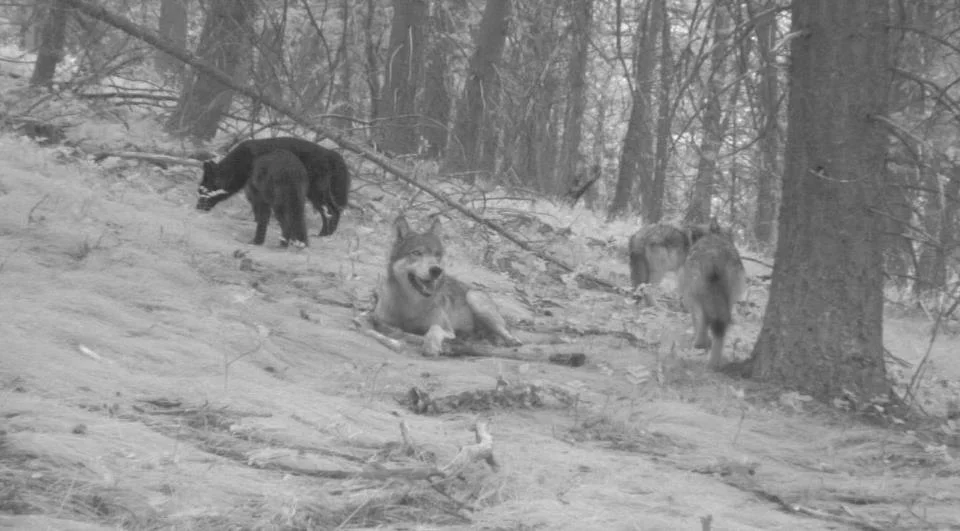
Wolves were once eradicated from the American West.
Today, they are returning—but their survival still depends on how we manage conflict with livestock. The Wood River Wolf Project demonstrates that prevention, not killing, is the future of coexistence.
Launched in 2008 as a bold field study, our initial goal was straightforward but ambitious: determine whether nonlethal methods could effectively deter wolves from preying on livestock across a vast, mountainous landscape where tens of thousands of sheep graze each summer and fall.
Our project area represented a true “worst-case” scenario. Native predators historically kill more sheep than any other type of livestock, and no large-scale, nonlethal effort of this kind had ever been attempted. At the outset, even experienced wolf managers and scientists were skeptical that it would work.
That was nearly two decades ago.
Since then, the Wood River Wolf Project has not only demonstrated that nonlethal deterrence works — we have shown that our approach is at least three times more effective than traditional lethal control in reducing conflict.
And we continue to refine, strengthen, and improve these methods year after year.
Our Impact
For nearly two decades, the Wood River Wolf Project has proven that nonlethal wolf management works — even in one of the most challenging grazing landscapes in the West.
• Proven at Scale
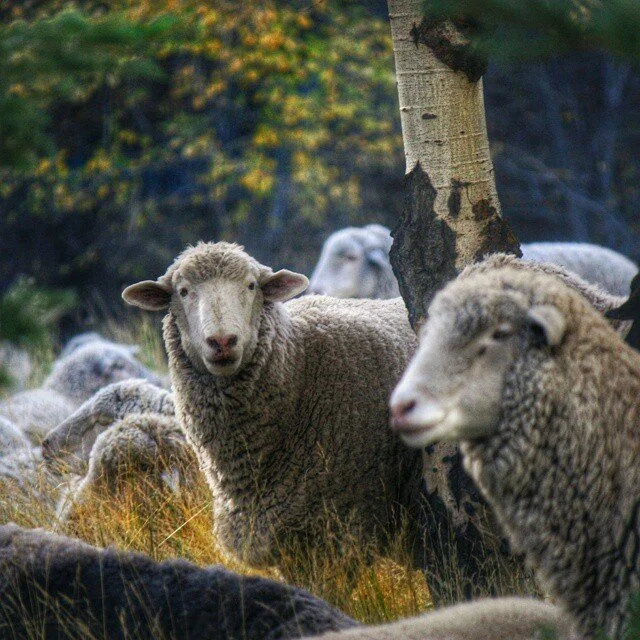
Implemented across 280,000+ acres of rugged public lands where between 10,000 - 25,000 sheep graze each summer. The annual average loss of sheep to wolves is documented at fewer than 5 sheep.
• More Effective Than Lethal Control
Peer-reviewed research (Journal of Mammalogy, 2017) found that our adaptive nonlethal strategies are at least three times more effective than traditional lethal control in
• Wolves Protected
Conflict prevention has reduced the need for lethal removals and helped stabilize local wolf packs. Only two wolves have been killed due to livestock conflicts in 18 years — the lowest loss of wolves within grazing regions in the state.
• Private Aerial Gunning Prevented reducing wolf–sheep conflict.
Aerial killing of wolves has been stopped in our Project area — in large part thanks to our ranching partners.
• Wolf Trapping Prevented on Public Lands
Wolf trapping and snaring are no longer permitted within the Project’s public land grazing areas — in large part thanks to the Blaine County Commission’s leadership.
• A Model for the World
What began in 2008 as a bold field experiment is now a leading example of science-based coexistence, informing efforts across North America and beyond.
Coexistence is not theoretical here. It is practiced, measured, and proven — year after year.


Our History: A Timeline of Recovery and Innovation
1930s — Wolves Nearly Eradicated
Gray wolves (Canis lupus) were almost eliminated from the lower 48 states, primarily to protect livestock. The American West lost its apex predator.
1974 — Federal Protection Restored
Wolves were listed under the U.S. Endangered Species Act. A small number were documented crossing from Canada into northwest Montana.
Mid-1980s — The Magic Pack
The first documented litter of wolf pups born in Northwest Montana marked the beginning of natural wolf recovery in the region.
1995–1996 — Wolves Reintroduced
Sixty-six wolves were reintroduced to central Idaho and Yellowstone National Park. Recovery efforts were managed by the U.S. Fish and Wildlife Service, the Nez Perce Tribe, and the National Park Service.
2002 — Conflict Reaches the Wood River Valley
Sheep losses to wolves began occurring in Blaine County.
2007 — A Turning Point
A newly formed wolf pack killed more than a dozen sheep in one incident along central Idaho’s “sheep superhighway.” Under standard management practices, lethal removal would have followed.
Instead, a coalition of ranchers, conservationists, and wildlife professionals proposed a different path: large-scale, proactive nonlethal deterrence.
2008 — The Wood River Wolf Project Is Launched
Founded by Suzanne Asha Stone, Mike Stevens, and Rick Williamson, the Project began as a bold field experiment to test whether nonlethal strategies could work in one of the West’s most challenging grazing landscapes.
Many doubted it would succeed.
2010 — Wolves Delisted in Idaho
Federal ESA protections were removed, and state management began, including the first wolf hunt in the lower 48 states in over a century.
2008–Present — Proof of Concept
For nearly two decades, the Wood River Wolf Project has demonstrated that proactive, science-based nonlethal strategies can reduce livestock losses and prevent lethal control. Because of this success, wolf packs in the Project area have been spared destruction while these methods remain in place and effective.
What began as an experiment is now a proven model of coexistence — showing that nonlethal measures are a reliable, effective means for managing native wildlife and domestic livestock.
Results at a Glance
90% Fewer Sheep Losses
In the first several years of implementation, documented sheep losses to wolves within the Project Area were 90% lower than elsewhere in Idaho (USDA National Agricultural Statistics Service).< 5 Sheep Per Year
While tens of thousands of sheep graze annually across more than 280,000 acres, average annual losses to wolves remain fewer than five sheep per year.2 Wolves Lost in 18 Years
Across nearly two decades of operation, only two wolves have been lethally removed in response to sheep depredation.10x Better Than Neighboring Areas
Adjacent grazing allotments have experienced sheep losses up to ten times higher — despite the ongoing lethal removal of entire wolf packs.What This Means
Proactive, science-based nonlethal strategies do more than reduce conflict — they outperform lethal control while protecting both livestock and wolves.
For a detailed review of our methods and data, see our peer-reviewed research publication.
Please see our research publication for more details.
Why Nonlethal Management Outperforms Lethal Control
Lethal control of (killing) wolves is commonly used to protect livestock in two primary forms:
reactive removal, in response to confirmed depredation, and
preemptive (proactive) culling, intended to reduce the likelihood of future losses.
Both approaches focus on reducing predator numbers.
While lethal methods can provide short-term suppression of individual depredation events, they do not address the underlying ecological and behavioral factors that drive conflict. Removing wolves — whether reactively or preemptively — can disrupt pack structure, fragment established territories, and increase the presence of younger or transient individuals. Research indicates that such disruption may elevate the risk of subsequent livestock depredation by destabilizing social groups and altering territorial dynamics.
The Wood River Wolf Project employs a fundamentally different strategy: conflict prevention rather than predator reduction.
Our adaptive management framework includes:
Continuous monitoring of wolf movements
Herding and livestock guardian dogs
Strategic hazing and aversive conditioning
Livestock husbandry adjustments
Real-time coordination among producers and wildlife managers
Instead of reducing wolf numbers, this approach reduces opportunity and modifies behavior. Stable wolf packs are less likely to prey on livestock. Clear territorial occupancy reduces the influx of transient wolves. Consistent deterrence reinforces avoidance.
Peer-reviewed research (Journal of Mammalogy, 2017) found that our adaptive nonlethal strategies were at least three times more effective than lethal control at reducing wolf–sheep conflict within the Project Area.
By addressing behavioral ecology, pack stability, and landscape-level risk factors, nonlethal management provides a more durable, targeted, and cost-effective solution to predator–livestock conflict.
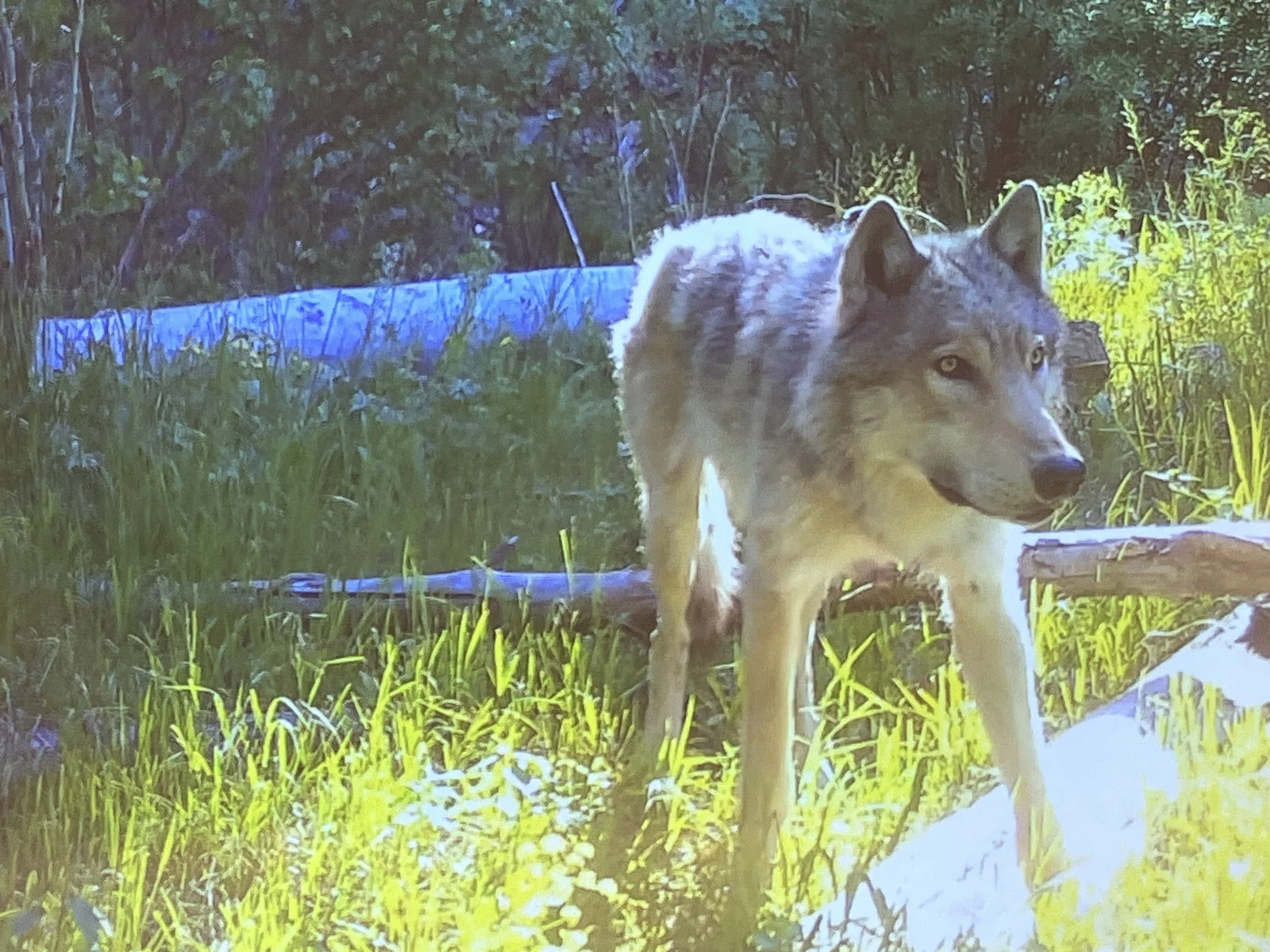
The Wood River Wolf Project has been featured in documentaries addressing the importance of predator and livestock coexistence.
"The Lords of Nature: Life in a Land of Great Predators" was released in 2009 and includes a seven-minute section featuring the work of the Wood River Wolf Project. Several of our collaborators and field staff were interviewed on camera.
"A Season of Predators" was filmed between May 2011 and April 2012 and features communities dealing with predator-livestock conflict in the Northern Rockies. One of these communities is the Wood River Valley. Several collaborators and field staff are also featured in this film.