
Science-Driven Monitoring & Early Detection
Effective conflict prevention begins with knowledge.
The Wood River Wolf Project prioritizes early detection of wolf presence, movement patterns, and seasonal behavior so that nonlethal deterrents can be deployed proactively — before depredation occurs.
Wolves are wide-ranging, territorial carnivores whose movements shift seasonally in response to prey availability, pack dynamics, and pup-rearing needs (Mech & Boitani, 2003). Understanding these patterns allows us to anticipate risk and respond strategically.
During the grazing season, we implement a multi-method monitoring program designed to reduce uncertainty and guide real-time management decisions.
1. Camera Trap Surveys
Camera traps (also called trail or game cameras) are motion- and heat-triggered devices that provide non-invasive wildlife monitoring. They are widely used in carnivore research to estimate occupancy, distribution, and behavior (O’Connell et al., 2011; Burton et al., 2015).
Within the Project Area, cameras are strategically deployed along:
Ridgelines and travel corridors
Forest edges and saddle crossings
Known wolf movement routes
Areas near active grazing allotments
Camera data allow us to:
Confirm wolf presence and identify pack members
Detect breeding pairs and pups
Monitor proximity to livestock bands
Track other predators (bears, mountain lions)
Monitor prey species such as elk and mule deer
These data provide early warning when wolves are shifting closer to grazing areas.
2. Howl Surveys
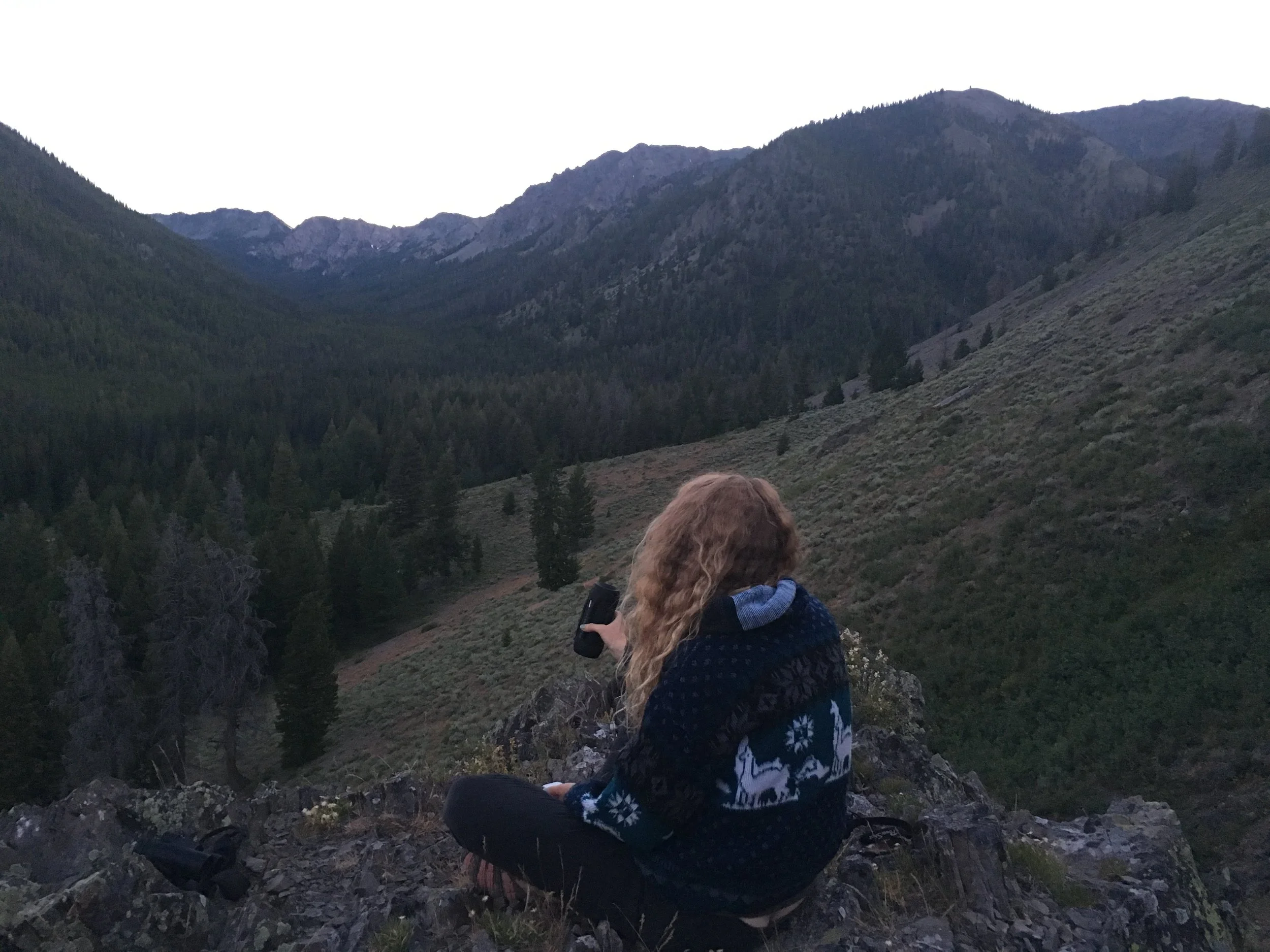
Wolves use howling to communicate territory occupancy and pack cohesion. During dawn and dusk — peak vocalization periods — trained field technicians conduct standardized howl surveys.
By broadcasting recorded howls and listening for responses, we can:
Confirm territorial occupancy
Estimate minimum pack size
Identify rendezvous areas
Detect new or dispersing individuals
Acoustic monitoring has long been used in wolf population assessments and is particularly effective during breeding and pup-rearing seasons (Harrington & Mech, 1982; Fuller & Sampson, 1988).
Howl surveys provide critical insight into pack stability — a key factor in reducing livestock conflict.
3. Field Observations & Track Surveys
Field technicians conduct routine ground surveys to identify:
Tracks and travel routes
Scat deposits
Kill sites
Bedding and resting areas
Track and sign interpretation provide near real-time information about wolf directionality and movement intensity. When combined with camera and acoustic data, this creates a layered understanding of spatial risk.
4. Public Sightings & Community Reporting
The Wood River Valley’s active recreation community plays an important role in detection.
We post signage at trailheads encouraging reporting of wolf sightings and regularly engage with residents at community events. When public reports are verified and cross-referenced with camera or field data, they can:
Confirm pack expansion
Identify new travel corridors
Provide early warning near livestock bands
Community-based monitoring expands our detection network while fostering shared stewardship.
5. Risk Assessment & Deployment Decisions
Monitoring is not an end in itself — it drives action.
When wolf presence is confirmed near livestock, we assess:
Distance to sheep bands
Time of year (particularly during pup-rearing season)
Terrain features that may funnel movement
Presence of attractants (e.g., carcasses)
Pack composition and stability
Based on this assessment, we may:
Increase human presence
Deploy or reposition electrified fladry
Activate light and acoustic deterrents
Adjust band placement or grazing timing
Enhance livestock guardian dog deployment
Research shows that prevention-based interventions guided by real-time monitoring are more effective than reactive responses after depredation has occurred (Bangs et al., 2006; Stone et al., 2017).
Why Monitoring Reduces Conflict
Lethal control reduces predator numbers.
Monitoring reduces uncertainty.
By identifying wolf movements before conflict occurs, we can intervene strategically rather than reactively. This reduces:
Livestock losses
Wolf mortality
Escalation of human–wildlife conflict
Long-term monitoring also supports pack stability — a factor associated with lower depredation rates compared to socially disrupted populations (Brainerd et al., 2008).
Prevention is most effective when it is informed by data.
Suggested Resources
Bangs, E. E., et al. 2006. Non-lethal and lethal tools to manage wolf–livestock conflict. Wildlife Society Bulletin 34(2): 1–7.
Brainerd, S. M., et al. 2008. The effects of breeder loss on wolves. Journal of Wildlife Management 72(1): 89–98.
Burton, A. C., et al. 2015. Wildlife camera trapping: A review. Journal of Applied Ecology 52: 675–685.
Fuller, T. K., & Sampson, B. A. 1988. Evaluation of howl surveys to estimate wolf pack sizes. Wildlife Society Bulletin 16(1): 95–98.
Harrington, F. H., & Mech, L. D. 1982. An analysis of howling response parameters useful for wolf pack censusing. Journal of Wildlife Management 46(3): 686–693.
Mech, L. D., & Boitani, L. (eds.). 2003. Wolves: Behavior, Ecology, and Conservation. University of Chicago Press.
O’Connell, A. F., Nichols, J. D., & Karanth, K. U. 2011. Camera Traps in Animal Ecology. Springer.
Stone, S. A., et al. 2017. Adaptive use of nonlethal strategies for minimizing wolf–sheep conflict in Idaho. Journal of Mammalogy 98(1): 33–44.

A cinnamon-colored black bear captured on one of the Project cameras.